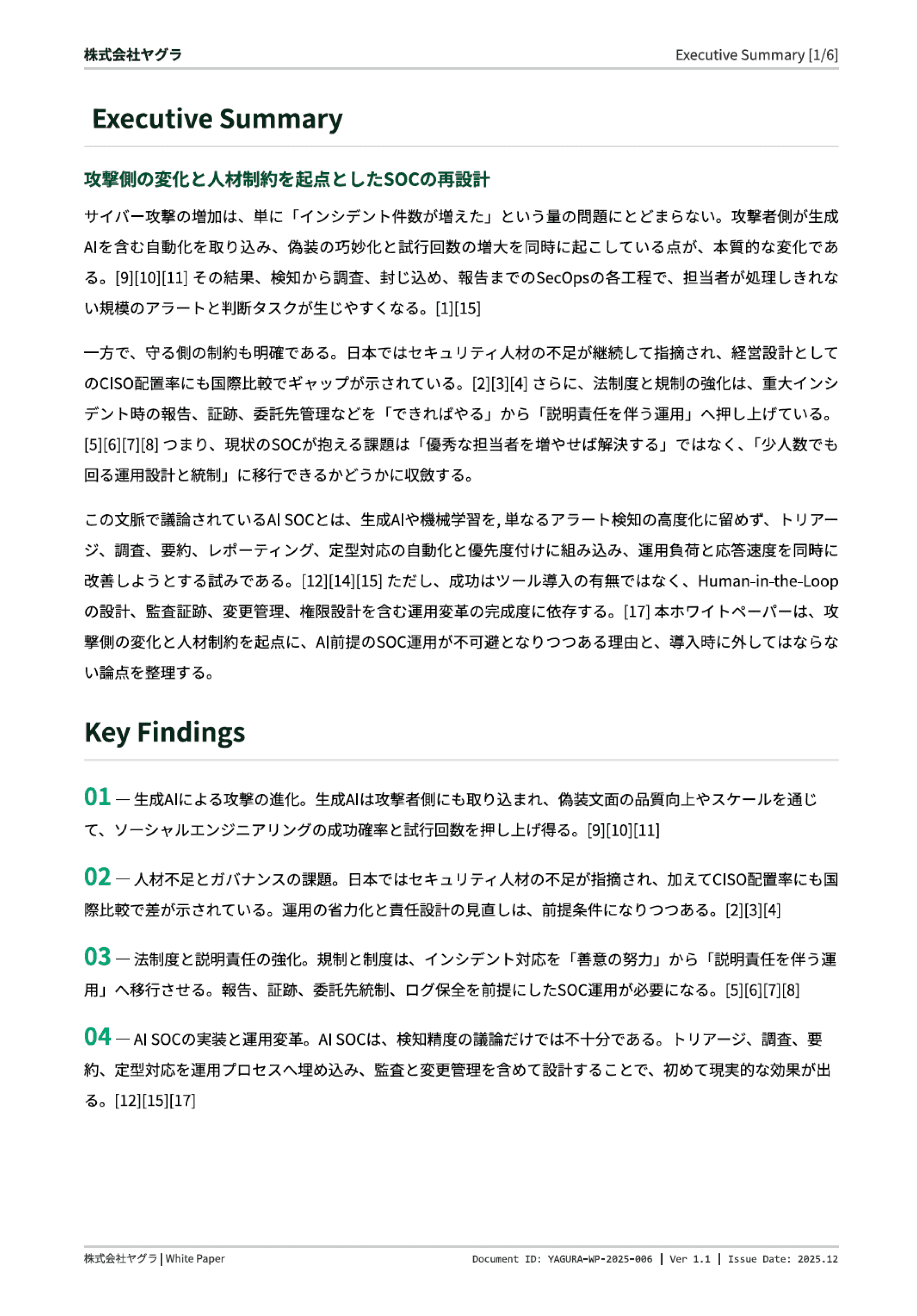

SIEM (Security Information and Event Management) aggregates logs from servers, endpoints, and the cloud, leveraging correlation analysis to support threat detection and investigation. This guide explains the differences between SIEM, log management, EDR, SOAR, and SOC, the factors driving cost, key pre-implementation checklists, and the roles of AI SIEM and AI SOC.

Updated: September 17, 2026. Added log management verification points for achieving 4 stars in the SCS evaluation system. SIEM basics, costs, and selection criteria were restructured on September 12.
What is SIEM: A platform for connecting logs to detect and investigate threats
SIEM stands for Security Information and Event Management, pronounced "seem." It collects logs and events from devices, servers, network equipment, and cloud services, correlates multiple data sources, and identifies security anomalies. Security teams use it to verify alerts, search historical activity, and investigate incidents. NRI Secure's terminology guide also describes centralized log management and correlation analysis as its core functions.
Organizations typically consider SIEM when they face challenges like "we have logs, but they are siloed by product and cannot be analyzed together" or "we do not know what happened before and after an alert." However, implementing a SIEM does not automatically establish a complete system for monitoring, triaging, and responding. You must define what data to collect and specify who does what after a detection.
How SIEM Works and Key Features
1. Log Collection and Normalization
Data is ingested via APIs, agents, Syslog, etc. Normalization is the process of standardizing different timestamps, usernames, IP addresses, and action names across various products into an easy-to-analyze format. Beyond basic connectivity, you must verify that the fields required for investigations are present and that you can detect if log ingestion stops.
2. Correlation Analysis and Threat Detection
In addition to analyzing individual logs, SIEM correlates multiple events occurring under the same user, device, or time frame. The use of rules, anomaly detection, and threat intelligence varies by product and configuration. Alerts are the starting point of an investigation, and they do not always guarantee that an actual attack has occurred.
3. Search, Investigation, and Reporting
Security teams search logs to verify event timelines and the scope of impact. Dashboards and reports help track daily status and demonstrate audit trails. The retention period, searchable period, and access permissions to raw logs must also be designed carefully.
4. Notifications and Response Integration
This includes ticket creation, team notifications, and automated responses via SOAR integration. For example, the Microsoft Sentinel official documentation explains capabilities from data collection to detection, investigation, and response. Since not all SIEMs support the same response actions, you must verify the targeted products, permissions, and approval workflows.
Example: Investigating Suspicious Activity by Correlating Logs
The following is a hypothetical example for explanation purposes and is not a Yagura customer case study.
At midnight, an account signs in from an unusual location.
Admin privileges are modified for the same account.
A large volume of data is subsequently downloaded from cloud storage.
Each event on its own could be a business trip or legitimate admin work. By using a SIEM to connect timestamps, users, and targeted resources, you can gather the context needed to determine if the work was approved or if similar behavior is occurring on other devices. This investigation is impossible if audit logs are not enabled in the source services.
Differences: Log Management, EDR, SOAR, and SOC
Log Management: Focuses on collecting, storing, and searching records. SIEM connects this data to security detection and investigation. Capabilities may overlap depending on the product.
EDR: Primarily detects, investigates, and responds to endpoint behavior. SIEM correlates and analyzes EDR data alongside other logs like identity, cloud, and network.
SOAR: Integrates multiple tools to automate workflows, notifications, information gathering, and responses. It is sometimes bundled within SIEM platforms.
SOC: The team or function responsible for monitoring, analysis, and response. SIEM is one of the platforms used by the SOC; they are not synonymous.
MDR: An outsourced service for detection, investigation, and response. Scope and response authority vary by contract.
The decision between in-house operations and outsourcing is detailed in our comparison of in-house vs. outsourced SOC.
What Determines SIEM Costs?
You cannot compare costs by product name alone. The starting point is to request quotes based on identical data volume, retention periods, search requirements, and operational scope. Since pricing models vary by vendor and contract, we outline the key cost components here rather than providing generic estimates or reduction rates.
Licensing and Usage Fees: Check the billing metrics—such as data volume, event volume, asset count, or active features—and terms for exceeding limits.
Storage and Search: Separate active hot storage for immediate searches from cold archive storage. Check for additional costs associated with data restoration, search queries, or data transfer.
Deployment Services: Include log integration, format parsing, initial rule creation, notification setup, and migration from existing environments.
Ongoing Operations: Include alert triaging, rule optimization, troubleshooting ingestion failures, and 24/7/365 staffing.
To estimate ingestion volume, sum up the "average GB/day per source × number of days," factoring in peak days or traffic spikes separately. This formula alone does not calculate total storage costs. Review official pricing resources, such as the Microsoft Sentinel pricing page, to verify ingestion, retention, and add-on costs individually.
Selection Criteria: 7 Points to Verify Before Implementation
Using these criteria for product comparisons and Proof of Concept (PoC) testing ensures decisions are based on performance rather than demo interfaces.
Target Use Cases: Define priority investigation targets first, such as suspicious logins, privilege changes, or anomalous endpoint behavior.
Required Logs: Confirm which fields must be collected from which products, and at what frequency.
Data Quality: Verify that the system can detect clock drift, missing fields, duplicates, or ingestion delays and stops.
Ease of Investigation: Test the actual workflow to see if analysts can drill down from an alert to raw logs, related users/devices, and timelines.
Operational Model: Define who has the authority and responsibility for initial triaging, critical decision-making, off-hours escalation, and containment.
Data Governance: Confirm storage locations, access controls, deletion/export policies, and the scope of data shared with AI models.
TCO and Migration: Compare costs for normal vs. peak data volume, migration of legacy logs, and data extraction policies at contract termination.
Useful Testing Records to Keep During PoC
Compare products using the same logs and scenarios, and record "expected detections," "actual detections," "evidence available for triage," "analyst time spent," and "remaining gaps." Standardize the start and end points of measurement, such as measuring detection time from event occurrence to notification, and investigation time from analyst triage start to resolution.
Test cases should include legitimate admin activities and missing log scenarios, not just simulated attacks. Even if false positives decrease, verify separately that no critical security events were bypassed. Define acceptance criteria based on your business operations and risk tolerance prior to the final rollout.
The Roles of AI SIEM and AI SOC
AI SIEM refers to SIEM solutions that leverage AI for log search, correlation analysis, detection, and summarization. AI SOC refers to the concept of integrating AI into overall SOC operations, including monitoring, investigation, and decision support. Because naming conventions do not define exact features or automation boundaries, compare them based on "what data is analyzed, what decisions are made, and what actions are executed automatically."
The inclusion of "AI" does not guarantee detection of all unknown attacks, eliminate false positives, or replace the need for analysts. It is essential that analysts can verify AI-generated summaries against raw logs, escalate to humans when evidence is insufficient, and manage access controls and logs for response actions. For details, see How AI SOC Works and Differences from Traditional SOC.
SCS Evaluation: How to Verify Log Management for 4 Stars
For ★4 in the SCS evaluation system, Requirement 4-4-3 defines standards for log ingestion and storage of target devices and authentication infrastructure. Do not treat SIEM deployment itself as the sole compliance goal; instead, verify target logs, required fields, retention periods, access protection, and periodic reviews against each standard. Original texts and application criteria can be found in the IPA ★3 and ★4 Requirements and Evaluation Criteria.
For instance, "configured for 6-month retention," "actually capable of retrieving historical logs," and "analysts reviewing and recording results" are distinct validation points. Settings shown in a newly deployed dashboard do not guarantee historical evidence or continuous operations. Organize your logging status using the SCS Readiness Checklist, and compare tier levels in our Differences Between Star 3 and Star 4 guide.
Frequently Asked Questions
Can log management tools substitute for SIEM?
If storage and search are your only goals, log management may suffice. If you need detection across multiple products and continuous alert investigation, compare the analytical capabilities and operational requirements of SIEM.
Do I need a SIEM if I already have EDR?
This depends on whether you need to correlate and investigate endpoint logs with identity, cloud, and network records. The presence of EDR alone does not make SIEM strictly mandatory or redundant.
Can a small team operate SIEM?
You can start incrementally by narrowing down target logs and detections, and establishing clear contacts and workflows. If internal teams cannot handle investigations, consider managed services, MDR, or AI-assisted investigation tools.
Will AI SOC eliminate the need for SIEM?
No. AI requires logs and alerts to conduct investigations. Because architectures can involve integration with an existing SIEM or an all-in-one platform, clarify who is responsible for collecting, storing, and searching the required data.
Evaluate Based on Your Logs and Operations
To explore log centralization and cross-analysis, read our Yagura AI SIEM service description. To streamline alert investigations from existing EDR/SIEM tools, view Yagura AI SOC. Product coverage will be verified based on your deployment environment.
For a SIEM and AI SOC consultation, preparing details on your active security tools, target use cases, log volume, retention periods, and current operational workflow will help us propose the optimal architecture.